
Why Rain Has a Smell — And Why We Love It

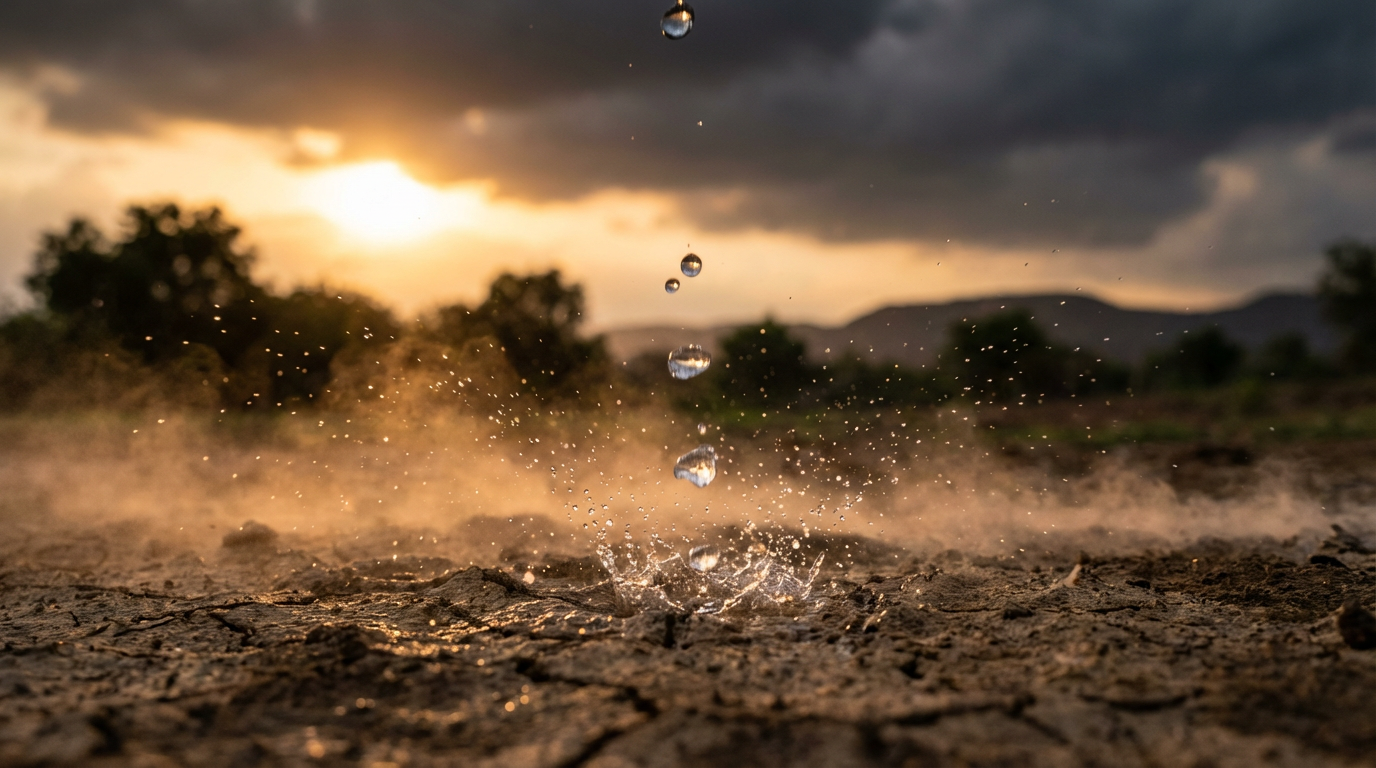
Have you ever noticed it?
The moment the first drop of rain touches dry earth — a scent rises.
Fresh. Earthy. Calm. Familiar.
Before the storm fully begins, the air changes.
But why does rain have a smell?
And more importantly — why do we love it so deeply?
The answer lies in chemistry, memory, and human evolution.
Table of Contents
The Science Behind the Smell of Rain
The scent of rain has a scientific name: petrichor.
The term was first coined in 1964 by Australian researchers studying the earthy aroma released after rainfall. They discovered that when rain falls on dry soil, it interacts with:
- Plant oils accumulated during dry periods
- A soil-dwelling bacteria called Actinomycetes
- A compound known as geosmin
Geosmin is responsible for that distinct earthy fragrance.
When raindrops hit the ground, tiny air bubbles form and burst, releasing microscopic scent particles into the air. We inhale them instantly.
That is petrichor.
And humans are extremely sensitive to it.
In fact, we can detect geosmin at very low concentrations — far more efficiently than many other compounds.
Why Humans Are Wired to Love the Smell of Rain
The love for rain scent is not accidental.
From an evolutionary perspective, rain meant survival.
Rain meant:
- Water for crops
- Relief from heat
- Renewal of vegetation
- Safer conditions for living
Over thousands of years, our brains associated the scent of approaching rain with positive outcomes.
Relief. Safety. Nourishment.
That emotional coding still exists today.
When you smell rain, your brain unconsciously registers:
“Something good is coming.”
Rain and Emotional Memory
Smell is directly connected to the brain’s emotional center — the amygdala and hippocampus.
This is why the scent of rain can instantly trigger:
- Childhood memories
- Nostalgia
- Calmness
- Reflection
- Romantic feelings
You may remember walking home from school.
Or sitting near a window during monsoon.
Or the quiet after a summer storm.
Rain scent carries emotional depth because it connects past and present in seconds.
This is called olfactory memory encoding — and it is stronger than visual memory.
The Psychological Effect of Petrichor
Studies in scent psychology suggest that earthy and rain-inspired fragrances often create perceptions of:
- Grounded personality
- Emotional stability
- Authenticity
- Depth
- Calm confidence
Unlike overly sweet or sharp scents, rain accords feel natural.
They do not try to impress.
They feel real.
And authenticity is deeply attractive in both personal and professional environments.
Why Rain Feels Luxurious in Fragrance
In modern perfumery, rain-inspired notes are considered sophisticated.
Why?
Because they are difficult to replicate naturally.
Perfumers recreate rain scent using:
- Mineral accords
- Green notes
- Soft ozone elements
- Earthy base tones
When balanced properly, a rain accord creates a clean yet emotional opening.
It feels fresh without being loud.
It feels intimate without being weak.
It feels memorable without demanding attention.
That balance is rare.
Rain as a Symbol of Presence
Rain does not force attention.
It arrives quietly.
Yet everyone notices.
It transforms the atmosphere without noise.
Perhaps that is why we are drawn to its scent.
It represents:
- Renewal
- Subtle power
- Emotional clarity
- Quiet strength
In a world full of sharp synthetic distractions, the smell of rain feels honest.
And honesty leaves a lasting impression.
Why We Keep Searching for It
People search for:
- “Why does rain smell good?”
- “What is petrichor?”
- “Why do I love the smell of wet soil?”
Because the experience feels personal.
But the answer is universal.
Rain carries science.
Rain carries memory.
Rain carries emotion.
And the next time you step outside after the first drop hits dry earth, pause.
What you are breathing in is not just moisture.
It is chemistry meeting memory.
It is nature meeting neuroscience.
It is one of the most powerful scents the human brain has ever known.